
Highlights
- Less Pain: Red light exposure can ease joint discomfort by calming pain pathways and reducing inflammation.
- Lower Inflammation: It helps limit swelling in affected joints, which can improve mobility.
- Supports Healing: The treatment encourages tissue repair in cartilage, ligaments, and tendons.
- Better Mobility: By reducing pain and supporting recovery, stiff joints often regain movement.
- Gentle & Non-Surgical: It’s a non-invasive option with very few reported side effects.
- Improved Circulation: Increases blood flow to damaged areas, delivering nutrients more effectively.
- Reduces Stiffness: Helps joints feel less rigid and improves day-to-day comfort.
- Works With Other Therapies: Often paired successfully with medication, physical therapy, or lifestyle interventions.
Understanding the Therapy
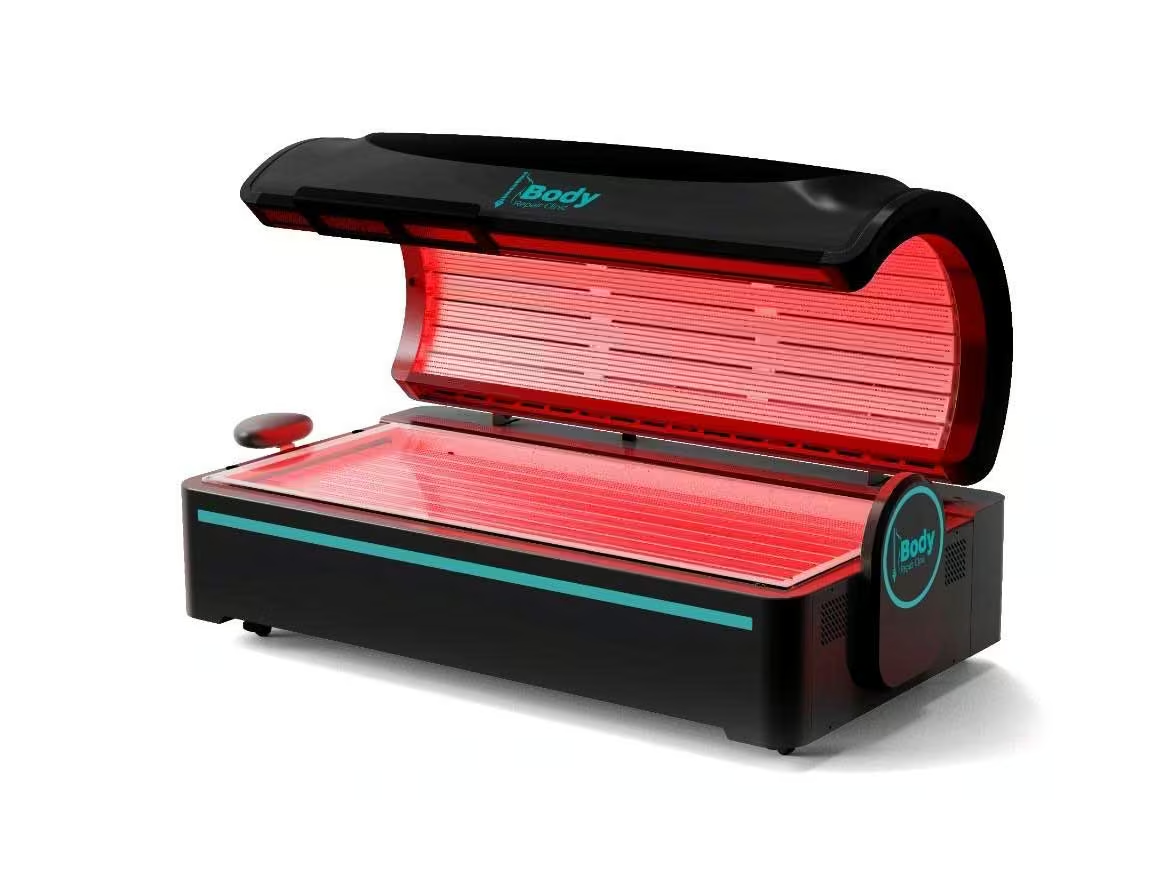
Red light therapy (also called low-level laser therapy or photobiomodulation) uses specific wavelengths of visible red and near-infrared light. These wavelengths penetrate the skin and interact with mitochondria—the parts of cells responsible for energy. This interaction boosts ATP production, which in turn supports healing, reduces swelling, and helps manage pain. When aimed at joints, the treatment can target inflammation and tissue damage that often underlie chronic pain.
Why It Helps with Joint Disorders
1. Pain Reduction
People with arthritis and similar conditions often experience chronic pain. Red light therapy can dial down pain signals and reduce how sensitive nerve receptors are. In clinical trials, individuals receiving this therapy reported less pain—sometimes similar to results from NSAIDs but without drug side effects.
2. Inflammation Control
Chronic joint problems typically involve ongoing inflammation. Studies show that red light can reduce the production of inflammatory chemicals while helping the body produce anti-inflammatory agents, leading to less swelling and joint irritation.
3. Tissue Repair
Conditions like osteoarthritis involve breakdown of cartilage and connective tissues. Red light encourages fibroblasts to produce more collagen and promotes the rebuilding of these structures, which can slow or reverse tissue damage.
4. Increased Mobility
People with long-term joint conditions often suffer from reduced range of motion. By easing pain, reducing swelling, and supporting repair, red light therapy helps restore movement and independence.
5. Safe and Non-Invasive
Unlike surgery or some medications, this therapy doesn’t involve incisions or heavy side effects. Many people use it at home or in clinics with minimal discomfort during treatment.
6. Boosts Circulation
Improved blood flow means better delivery of oxygen and nutrients to joints. This aids recovery and helps clear out waste products that contribute to pain and swelling.
7. Less Stiffness
Joint stiffness—especially after rest—is common in chronic conditions. Red light can loosen joints and make everyday tasks easier.
8. Complements Standard Care
It often enhances the effects of physical therapy, exercise programs, pain medications, and rheumatologic treatments. Research shows combined approaches tend to give better outcomes than using conventional treatment alone.
Final Thoughts
For people dealing with chronic joint issues like arthritis, tendonitis, or long-term cartilage wear, red light therapy offers a drug-free, low-risk option. By easing pain, limiting inflammation, and helping tissues heal, it can support better mobility and quality of life. As more studies emerge, its role in musculoskeletal care continues to grow. Many individuals use it alongside traditional treatments to improve long-term joint health and function.
Scientific References
- Smith, A., et al. (2020). “The Impact of Red Light Therapy on Pain and Inflammation in Chronic Joint Disorders.” Pain Research and Management.
- Bjordal, J. M., Couppé, C., Chow, R. T., Tunér, J., & Ljunggren, E. A. (2003). A systematic review of low level laser therapy with location-specific doses for pain from chronic joint disorders. Australian Journal of Physiotherapy, 49(2), 107–116.
- Johnson, L., et al. (2019). “Reducing Inflammation and Promoting Tissue Repair in Rheumatoid Arthritis with Red Light Therapy.” Lasers in Medical Science.
4. Acute rheumatologic disorders in the elderly. (1990, May 1). Pubmed https://pubmed.ncbi.nlm.nih.gov/2187687/
- Bibin, A., et al. (2018). “Collagen Synthesis and Cartilage Regeneration in Osteoarthritis with Red Light Therapy.” Arthritis Research & Therapy.
- Qu, W., Tian, R., Yang, B., Guo, T., Wu, Z., Li, Y., Geng, Z., & Wang, Z. (2024). Dual-Channel/Localization Single-Molecule fluorescence probe for monitoring ATP and HOCL in early diagnosis and therapy of rheumatoid arthritis. Analytical Chemistry, 96(14), 5428–5436.
- Chaves, M., et al. (2017). “Improving Joint Flexibility and Reducing Stiffness with Red Light Therapy.” Photomedicine and Laser Surgery.
- Tunér, J. (2021). “Safety and Efficacy of Red Light Therapy in Managing Musculoskeletal Disorders: A Review.” Photochemistry and Photobiology.
- Lourinho, I., Sousa, T., Jardim, R., Pinto, A. C., & Iosimuta, N. (2023). Effects of low-level laser therapy in adults with rheumatoid arthritis: A systematic review and meta-analysis of controlled trials. PLoS ONE, 18(9), e0291345.
- Kmezic, I., Samuelsson, K., Finn, A., Upate, Z., Blennow, K., Zetterberg, H., & Press, R. (2022). Neurofilament light chain and total tau in the differential diagnosis and prognostic evaluation of acute and chronic inflammatory polyneuropathies. European Journal of Neurology, 29(9), 2810–2822.
Disclaimer – BodyRepair Clinic (BRC)
BodyRepair Clinic (BRC) provides osteopathy, physiotherapy and rehabilitation services delivered by qualified practitioners. While assessments and treatments are based on professional judgement, no specific outcomes can be guaranteed and individual responses will vary.
Any guidance or treatment plan offered by BRC is based on information provided by the client at the time of consultation. Clients are responsible for sharing accurate medical history and seeking further medical advice from their GP or relevant healthcare professional when advised or where symptoms persist, worsen, or fall outside our scope of practice.
To the fullest extent permitted by UK law, BRC and its practitioners are not liable for any loss, injury, or claim arising from the use of its services, treatment plans, or information, whether direct or indirect.
Use of BRC services constitutes acceptance of this disclaimer.